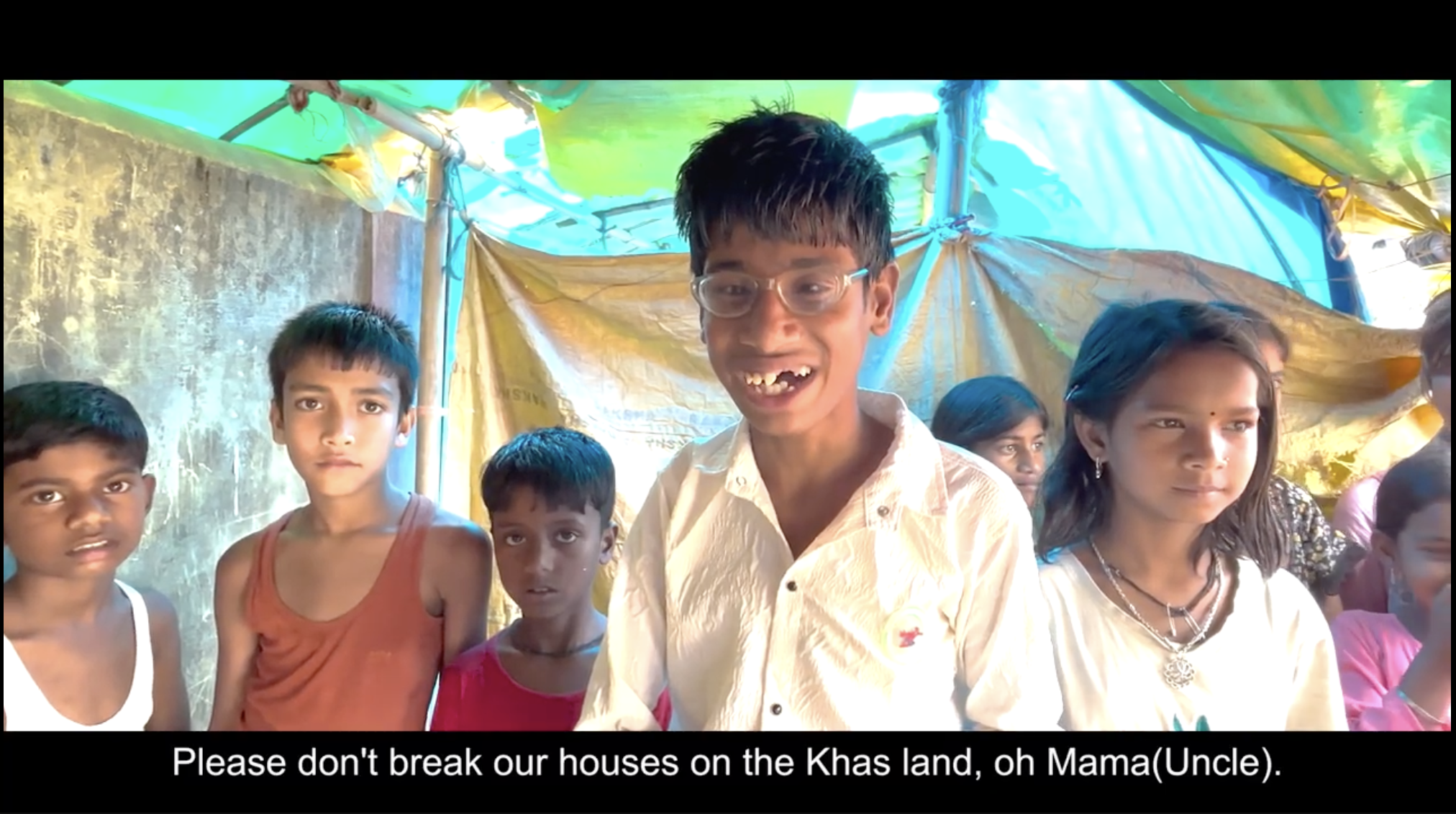
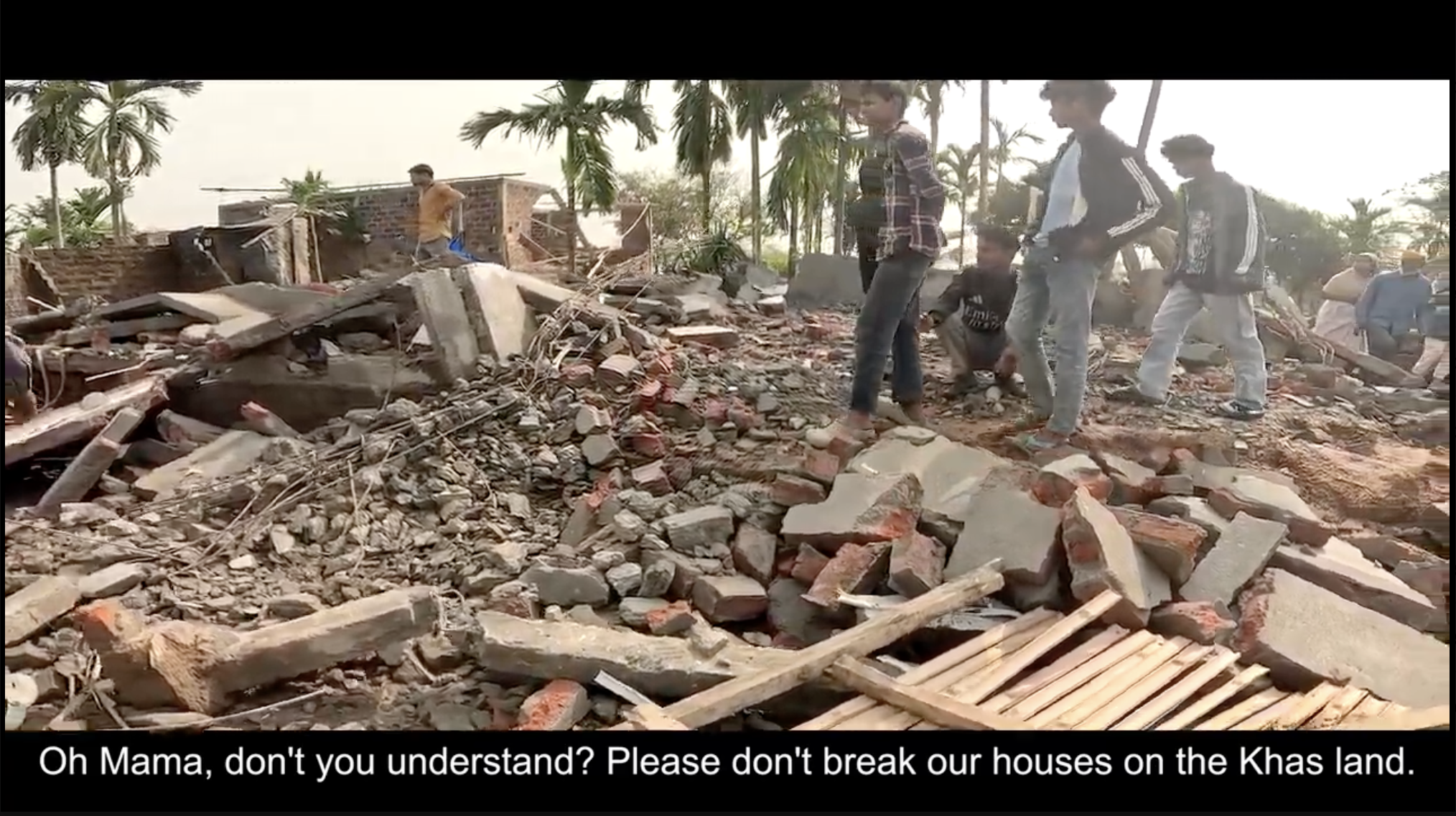
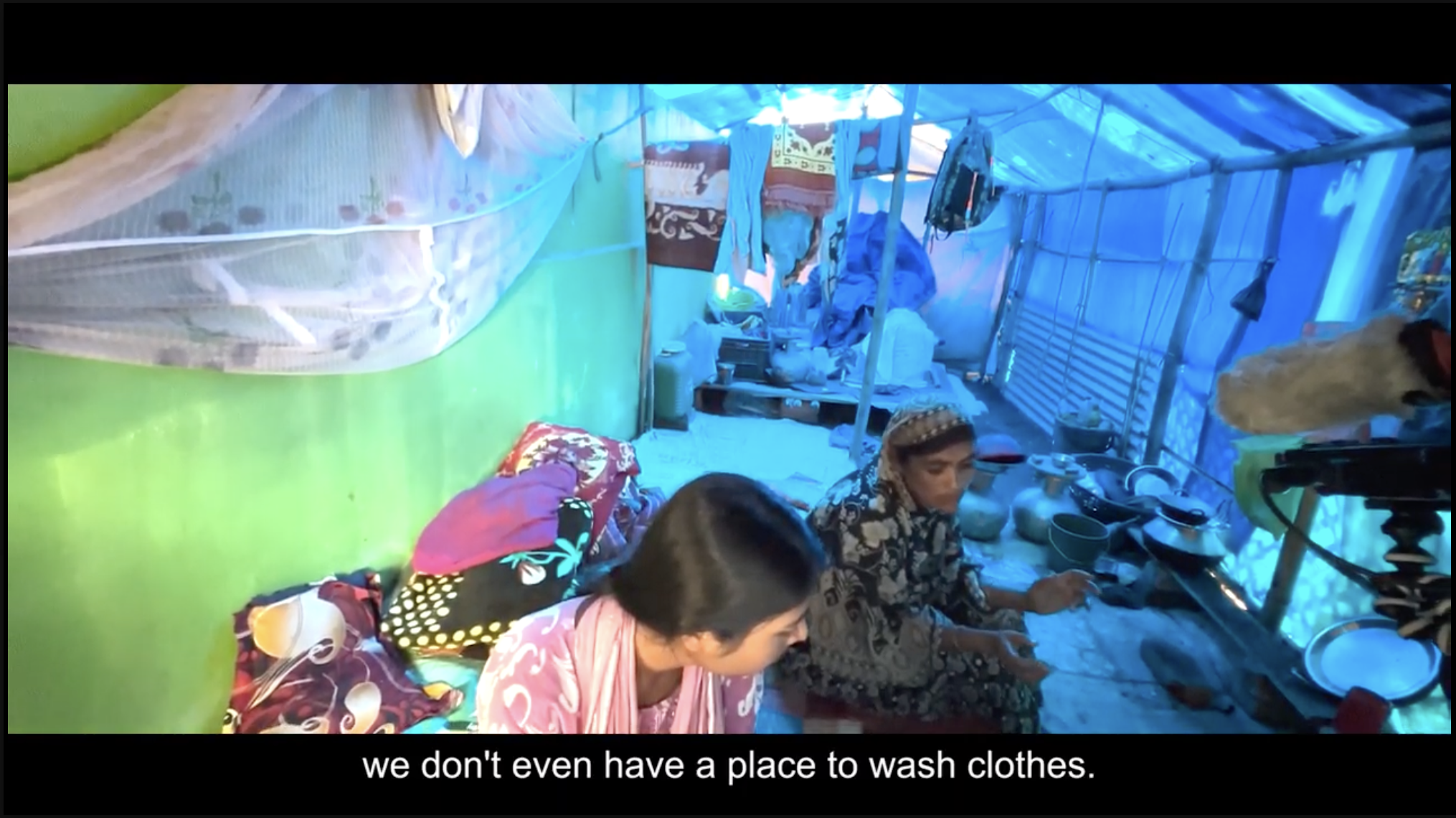
Headlines about the treatment of Muslims in the Indian state of Assam are often dystopian. You'll see Chief Minister Himanta Biswa Sarma referring to his own constituents with anti-Muslim slurs; hundreds of Muslim-owned homes being demolished in targeted eviction drives; foreigners' tribunals scrutinizing people who have lived in India their entire lives; deportations at gunpoint from Assam to Bangladesh; and thousands of families crammed into the blue tarpaulin tents of eviction camps, where Muslims are turned to refugees in their own home state. Despite this, awareness regarding the sheer scale of structural violence against Muslims in Assam is limited within the diaspora.
This factsheet breaks down what's happening to Muslims in Assam, and who is driving this machinery of dehumanization.
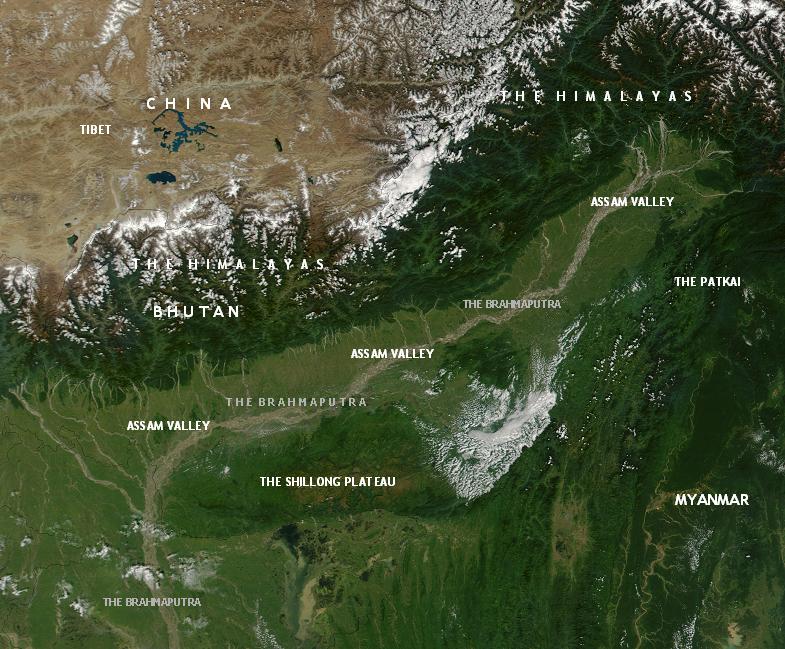
Assam is a state in northeastern India. Bordering Bangladesh, the state is ethnically, linguistically, and religiously diverse; Assamese, Bengalis, and a number of indigenous tribes all call the state home. It is also a state that is "overwhelmingly rural", with 86% of the population living outside of cities.
While the majority religion in Assam is Hinduism, a significant minority are Muslim, comprising around 34% of the state's population - or more than one in three people.
Who are Assamese Muslims? Are they the same as Bengali-speaking Muslims?
According to the Economic Times, 4% of the state's Muslim population are indigenous Assamese, while the rest are Bengali-speaking Muslims.
As Abid Faheem writes for Nouse Network, however, there is complexity even within these subgroups:
"Assam's Muslims are not a monolith. They are Assamese-speaking and Bengali-speaking, riverine and hill-dwelling, indigenous and migrant, rural and urban. Their demographic story is, at its core, a story about structural deprivation - and about what happens to communities when the state fails to reach them."
Tensions surrounding the migration of Bengali-speaking populations to Assam have persisted for decades. In the 1970s, refugees fled to Assam during Bangladesh's war of independence, while in later years, migrant workers from Bangladesh and the neighboring state of West Bengal settled in Assam in search of employment.
Since the election of Prime Minister Narendra Modi and the far right Bharatiya Janata Party (BJP) in 2014, anti-Bengali sentiment in Assam has converged with the violent mainstreaming of Hindutva, or Hindu supremacy, and anti-Muslim hatred in India.
Who is Chief Minister Himanta Biswa Sarma, and what does he say about Muslims in Assam?
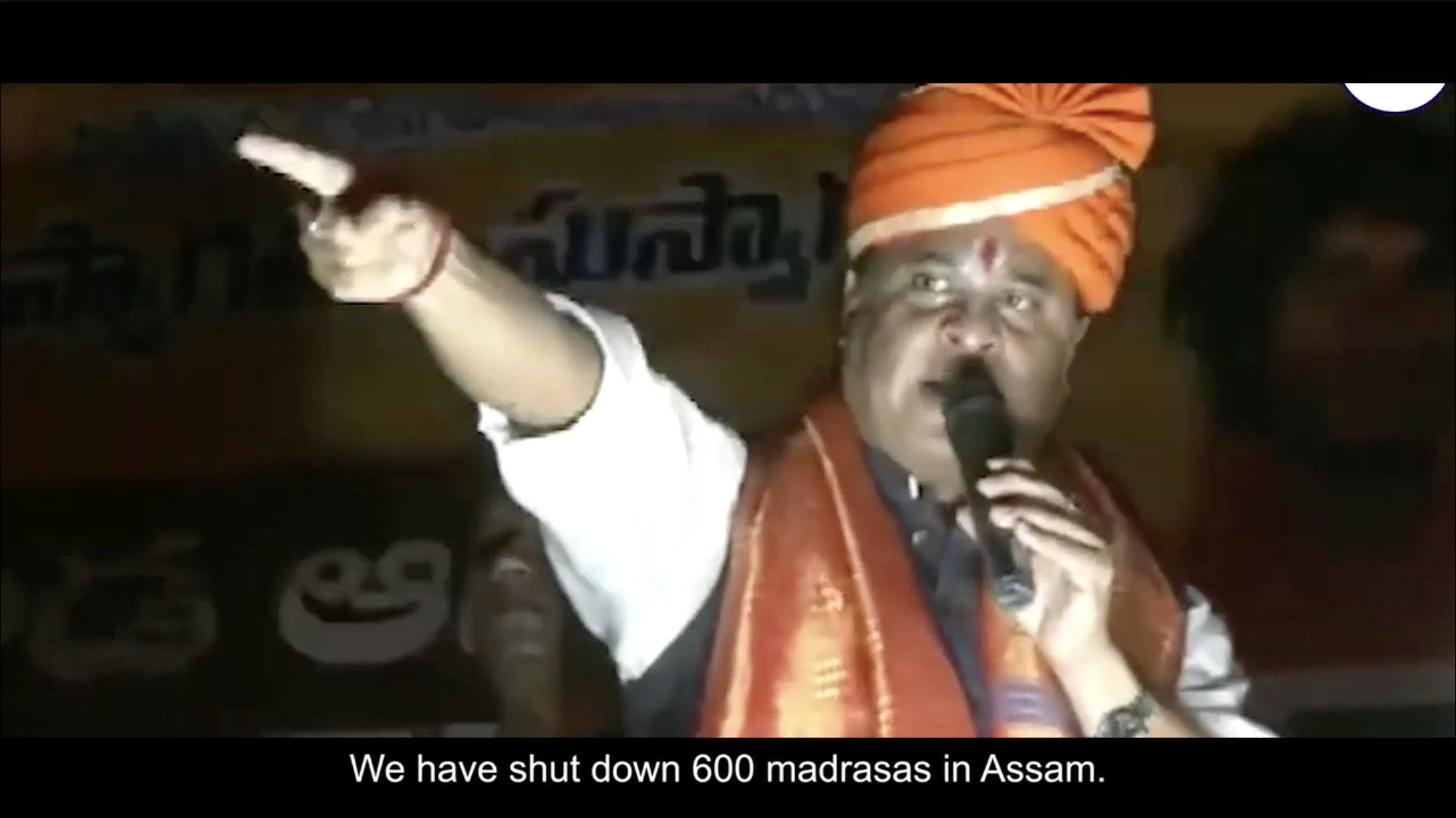
Himanta Biswa Sarma, a politician from the far-right Bharatiya Janata Party (BJP), has characterized himself as a Hindu supremacist and deeply hostile figure towards Bengali-speaking Muslims since his election as Chief Minister of Assam in 2021. He has made anti-Muslim remarks in hundreds of public comments, referring to them as “Miyas” (a derogatory word for Bengali-speaking Muslim), “mullahs,” “infiltrators,” and “jihadis” who are aimed at “changing the demographics” of Assam.
Sarma has also explicitly encouraged violence against Muslims. In his 2026 re-election campaign, the BJP released a video of Sarma firing a rifle at AI-generated images of Muslims, accompanied by the slogans “Point Blank Shot” and “No Mercy.” Though the video was deleted after nationwide outrage, Sarma and the BJP refused to apologize for its dangerous messaging.
Other dangerous hate speeches Sarma has made include the following:
In January 2026, Sarma boasted that it was his job to target Muslims and “make them suffer.” He also declared that 400,000 to 500,000 “Miya” voters would be deleted from the voter rolls, saying, “Yes, we are trying to steal some Miya votes. Ideally, they should not be allowed to vote in Assam. They should be able to vote in Bangladesh.” A month later, activist Harsh Mander filed a police complaint against Sarma for his comments, to which Sarma responded by saying he would file “100 cases” against Mander.
Also in January 2026, Sarma encouraged Hindus to “give a hard time to the Miyas (slur for Muslims) in whichever way possible. Even small acts, such as paying less fare in a rickshaw, if they ask [for] five rupees, give [them] 4 rupees. They will leave Assam only if they face hardships.”
In April 2026, Sarma lauded the mass evictions of Bengali-speaking Muslims, saying his government had “broken the limbs” of “Bangladeshi Miyas.”
In June 2025, Sarma claimed Muslims were "weaponizing beef" during Eid al-Adha, sparking a statewide crackdown on beef consumption. Over the next two months, 100 eateries were raided, and nearly 300 Muslims were arrested under Assam's cow protection laws.
In August 2024, Sarma gave legitimacy to the years-old conspiracy that Muslims purposefully cause flooding in Hindu-majority areas, claiming that a Bengali Muslim-run university had waged "flood jihad" by "cutting hills" and causing flash floods in Guwahati.
The National Register of Citizens (NRC) is often cited as a catalyst for this new wave of structural marginalization against Muslims in Assam, exacerbated by the election of Sarma. What happened?
In 2019, the BJP-ruled government of Assam became the first Indian state to update its National Register of Citizens (NRC), or a list of people who "qualify" as citizens of India. Those left off the list are effectively categorized as "foreigners" or "illegal migrants."
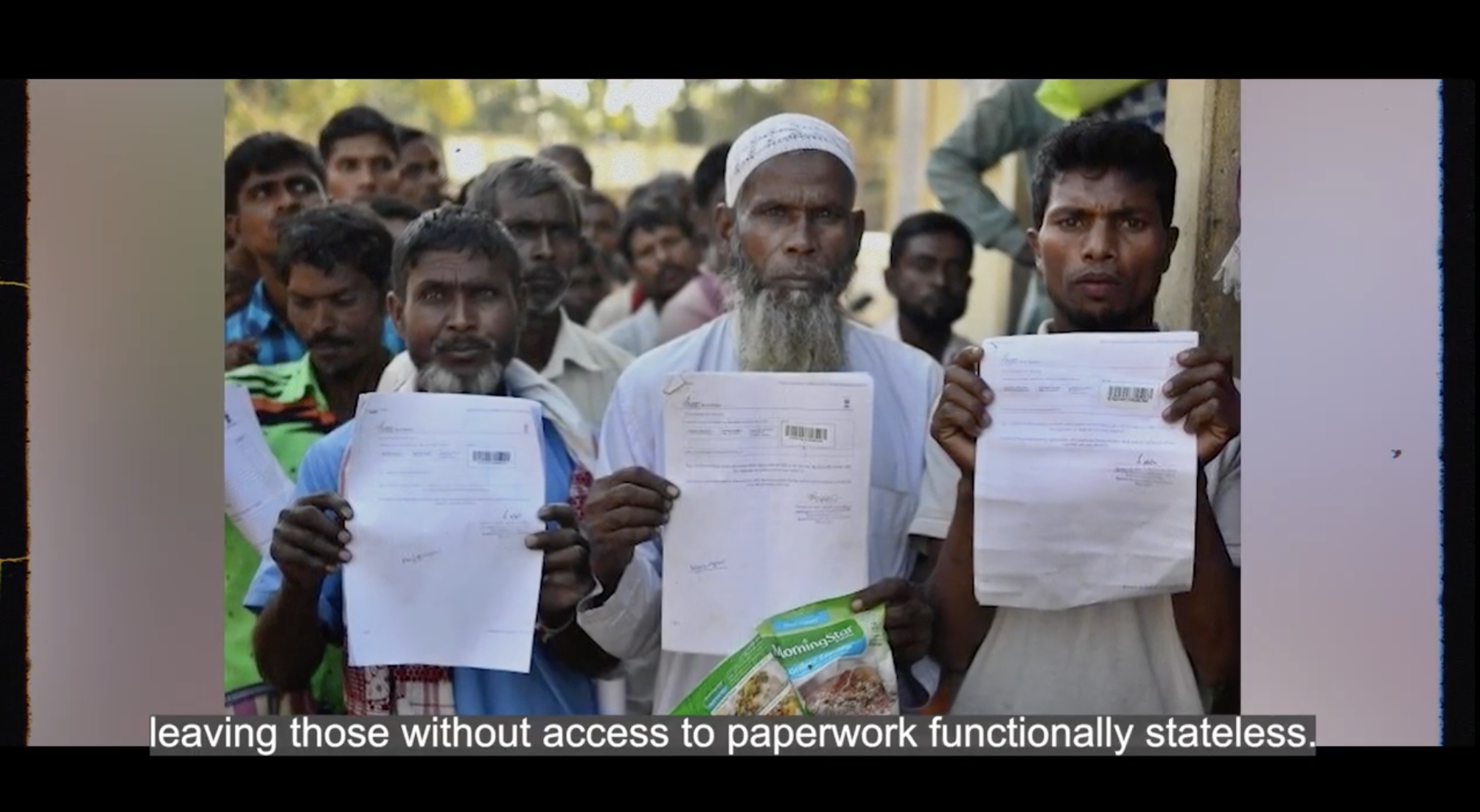
Because the NRC required individuals to produce documentation to prove citizenship - something that is often deeply inaccessible to poor and marginalized communities - nearly two million Assamese people (around 6% of the population) were left off the register, many of whom had been born and raised in India. The vast majority of these people were Bengali-speaking Muslims.
The 2019 revision of the NRC was supplemented later that year with the introduction of the explicitly discriminatory Citizenship Amendment Act (CAA), a discriminatory law that offers fast-tracked citizenship to all religious groups except Muslims. The CAA therefore allowed Hindus and other groups without documentation to "regain" their citizenship quickly, while millions of Muslims were rendered effectively stateless.
What happens to Muslims left off the NRC?
In a 2026 report, the Panel of Independent International Experts (PIIE) noted that for those nearly 700,000 Muslims left off the NRC, the consequences "have been severe":
"Between 2019 and 2024, the biometric data of over 900,000 individuals remained locked, preventing issuance of Aadhaar cards and access to government services, banking, and welfare schemes. Even where access has subsequently been restored, the prolonged denial has reportedly caused significant economic, social and psychological harm, disproportionately affecting rural Muslim communities.
At the same time, the continued uncertainty surrounding the NRC has left large numbers of individuals exposed to the risk of detention, expulsion, or further verification, without effective avenues for appeal. Recent developments indicate a shift towards more coercive enforcement: since 2025, authorities have been empowered to determine nationality and order detention or expulsion within extremely short timeframes, including within 24 hours in certain cases, with limited procedural safeguards. In parallel, the powers of Foreigners' Tribunals have been expanded, including to issue arrest warrants and commit individuals to detention."
These Foreigners' Tribunals are quasi-judicial bodies that, over the past four decades, have stripped over one million people of Indian citizenship, often funneling these newly stateless individuals into detention centers. The detention center in Goalpara district's Matia village is the largest in India, enclosed by 20-foot-high walls, surrounded by six watchtowers, and swept by a 100-meter high-beam light.
What happens to people in detention centers? Are they deported?
Some people are kept in detention indefinitely, where they face living conditions described as "appalling" by Amnesty International: "overcrowding, separation from families, lack of segregation between different categories of prisoners, high levels of depression and inadequate medical facilities in the detention centers," with one detainee reporting 60 to 70 people packed into one room.
Others, however, are expelled from India entirely. In 2025, Human Rights Watch reported that the BJP governments of several states - including Assam - had begun rounding up Bengali-speaking Muslims and forcing them over the Bangladeshi border. One former schoolteacher in Assam, 51-year-old Khairul Islam, was deported violently:
"Indian border officials tied his hands, gagged him, and forced him into Bangladesh, along with 14 others. 'The [Indian Border Security Force] officer beat me when I refused to cross the border into Bangladesh and fired rubber bullets four times in the air,' he said. He managed to return two weeks later."
Journalist Rokibuz Zaman, writing for Scroll, tells the story of one Muslim woman who was sent to a detention center before being deported to Bangladesh:
"On May 30, [2026,] Begum appeared before the tribunal and her lawyer submitted her petition to the court. Within minutes, however, the tribunal member called the police and ordered Begum's arrest, without passing any order, her lawyer alleged. She was taken to the Juria police station, and later to the office of the Nagaon superintendent of police, and from there to the Matia detention centre in Goalpara district.
A week later, when her husband went to meet her, Begum was no longer at the camp, India's largest detention centre. [She] had been pushed into Bangladesh – as the family eventually found out when it filed a habeas corpus petition at the Gauhati High Court."
Another Muslim woman, Manowara Bewa - described in a Scroll story by Abhishek Saha as "barely literate" and a widow - is now missing after a decade-long battle to have her citizenship recognized by the Assamese government:
"As part of this new crackdown [by Sarma's government], evidently not limited to 'declared foreigners' in detention but also those out on bail, Manowara was summoned to the police station on May 24 and has since been missing. The authorities have not provided any information regarding her whereabouts.
Her family fears that she may have been 'pushed' across the border and there are claims that she has been spotted in a video from Bangladesh's Sherpur district."
What is happening in Assam's eviction camps?
Over the past several years, BJP-ruled states have normalized the use of bulldozers to carry out targeted demolition drives against Muslim-owned homes, businesses, and places of worship as collective punishment.
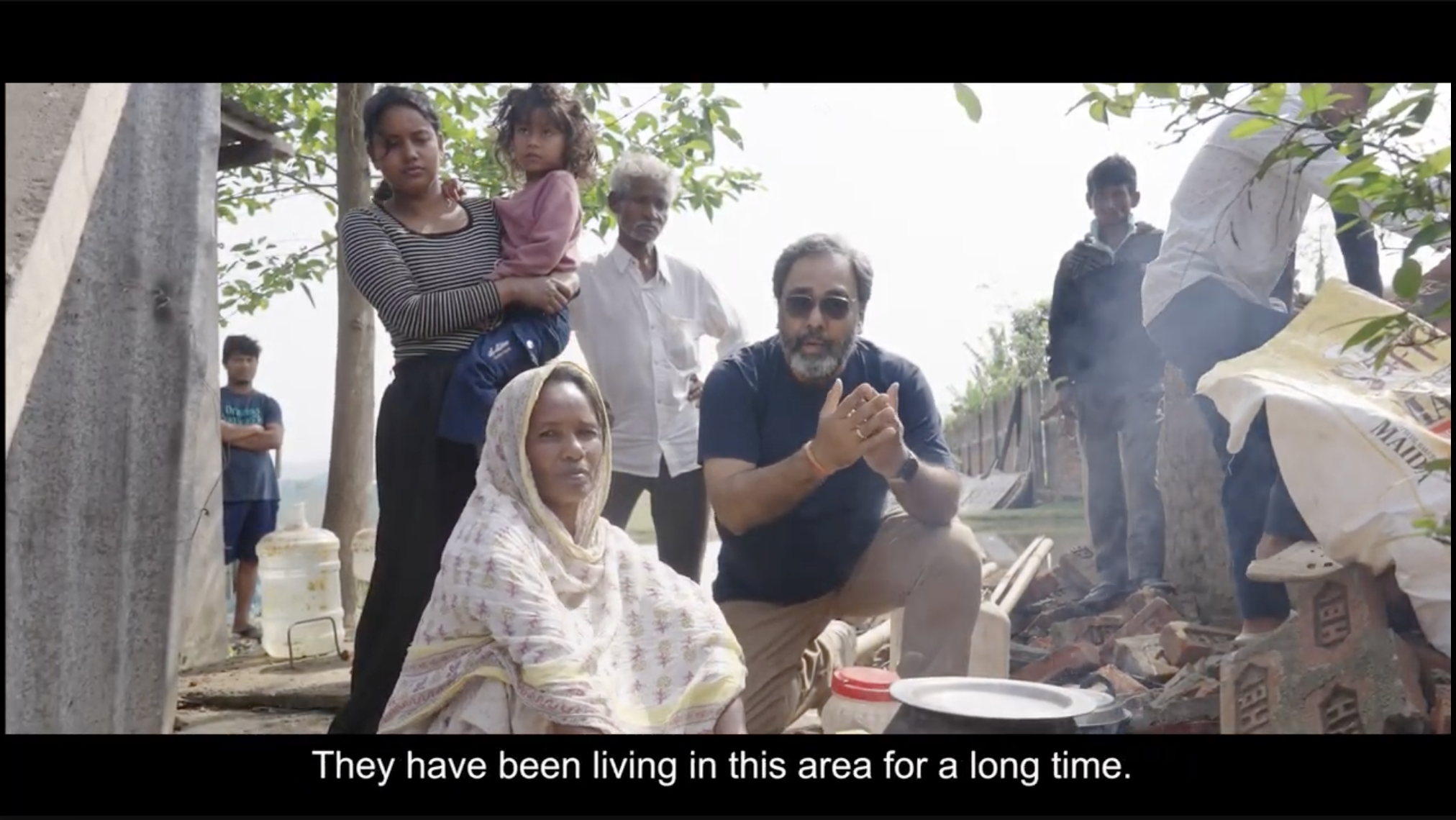
In Assam, these demolition drives - also called eviction drives - target entire Muslim neighborhoods, leaving hundreds and sometimes thousands of families displaced in one fell swoop. As The New Humanitarian puts it: "One person displaced every 25 minutes, 24 hours a day, for nearly five years."
While mass evictions were ongoing since the BJP first assumed power in Assam in 2016, Chief Minister Sarma's rule gave these drives a decidedly communal cast by explicitly targeting Bengali-speaking Muslims.
As PIIE reports:
"Reports reviewed since 2022 indicate that these communal evictions have not only continued, but significantly intensified in both scale and frequency. Media reports published in late 2025—after another series of massive eviction drives in Golaghat district—indicated that at least 17,600 families had been uprooted since the BJP came to power in 2016, with the pace of evictions accelerating sharply under Sarma: over 5000 families were reportedly displaced in just 45 days since mid-July.
The eviction campaign continued through the latter half of 2025 and into early 2026, with repeated large-scale operations reported across multiple districts... In January 2026, authorities demolished approximately 1,200 homes belonging to Bengali-speaking Muslim families over two days in Sonitpur district...
It is noteworthy that these reports have continued despite the Indian Supreme Court issuing an interim stay on all demolitions in the country without its prior permission (in September 2024) and later (in November 2024) issuing detailed guidelines to be followed by authorities."
Once displaced, families are forced to take refuge in tent-filled eviction camps, where access to clean water, healthcare, and other basic amenities are all limited.
Is there apartheid in Assam?
Apartheid, as defined by Article 7(2)(h) of the Rome Statute of the International Criminal Court (ICC), “means inhumane acts... committed in the context of an institutionalized regime of systematic oppression and domination by one racial group over any other racial group or groups and committed with the intention of maintaining that regime.”
The PIIE concludes in its 2026 report that “the systematic stripping of citizenship, legality, and residence from Bengali-speaking Muslims in Assam might... amount to apartheid as a crime against humanity.”
The Panel includes the following reasons for this conclusion in its analysis (direct quotes):
In relation to education, the government has closed almost every Islamic seminary in Assam, thereby disrupting the education of thousands of Bengali Muslim students.
In relation to cultural expression, the government has attempted to shut down expressions of ethnic or religious identity by Bengali-speaking Muslims. In October 2022, authorities sealed a privately-established Miya Museum in Goalpara within days of its opening and arrested its organisers under antiterror laws.
In relation to electoral participation, large numbers of Bengali-speaking Muslims are unable to vote after being arbitrarily designated as ‘doubtful voters’ (D-voters). Further, the government has redrawn electoral constituency boundaries in order to dilute the weight of Bengali-Muslim votes.
The Panel states in summary:
"Assessed cumulatively and in light of the broader factual matrix documented in this report, these measures have resulted in large-scale nationality insecurity, disenfranchisement, denial of access to welfare and public services, arbitrary detention, deportation, and heightened exposure to violence and social exclusion. Such acts are of comparable gravity to other crimes against humanity and correspond to forms of legislative and administrative exclusion recognised in the 1973 Apartheid Convention as characteristic of apartheid regimes, including denial of nationality, political participation, and basic civil rights... The scale, policy-driven character, and sustained consolidation of these measures support the inference that they form part of an institutionalised regime of domination pursued pursuant to state policy."
How can I help Muslims in Assam?
Most people do not know that discrimination against Muslims in Assam may have reached apartheid levels. You can raise awareness by sharing this factsheet and amplifying the documentary Plastic Sky Apartheid (2026), a documentary produced by filmmaker Dheeraj Sarthak in collaboration with IMAM.