
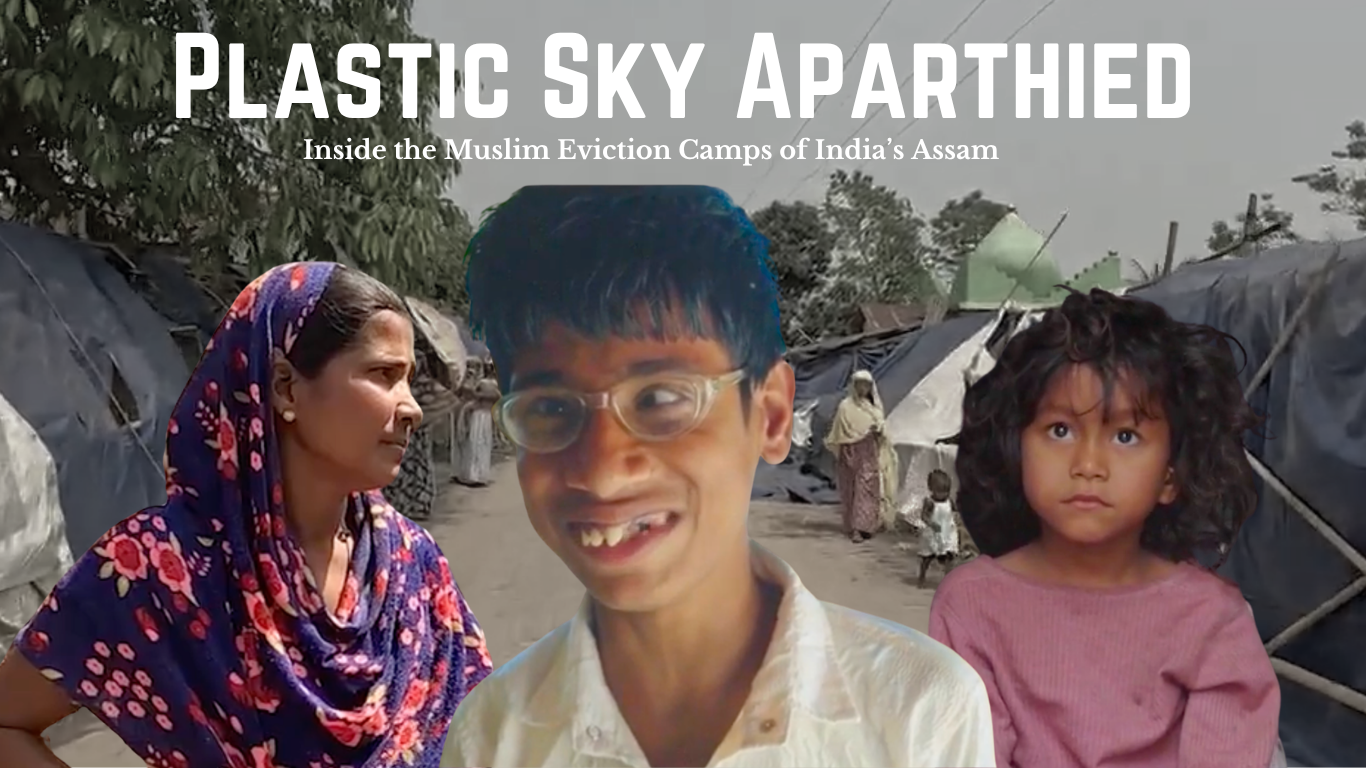
Plastic Sky Apartheid: Inside Assam’s Muslim Eviction Camps
A Film by Dheeraj Sarthak x IMAM
Himanta Biswa Sarma, Chief Minister of the northeastern Indian state of Assam and proud Hindu supremacist, is explicit in his hatred for Assam’s Bengali-speaking Muslim minority - or, as he disparagingly refers to them, “Miyas.” Between 2022 and 2025, under Sarma’s rule, over 17,600 Bengali-speaking Muslim families were displaced due to targeted eviction drives across Assam, in which bulldozers rip through Muslim-majority neighborhoods and settlements.
Coupled with a nationwide assault on Muslims’ citizenship rights via the National Register of Citizens, Muslims who have lived their entire lives in Assam find themselves staring down the barrel of deportations, indefinite imprisonment in detention centers, scrutiny before foreigners’ tribunals that violate due process, and the demolition of their homes, landing them in the plastic tents of eviction camps - turned to refugees in their own homeland.
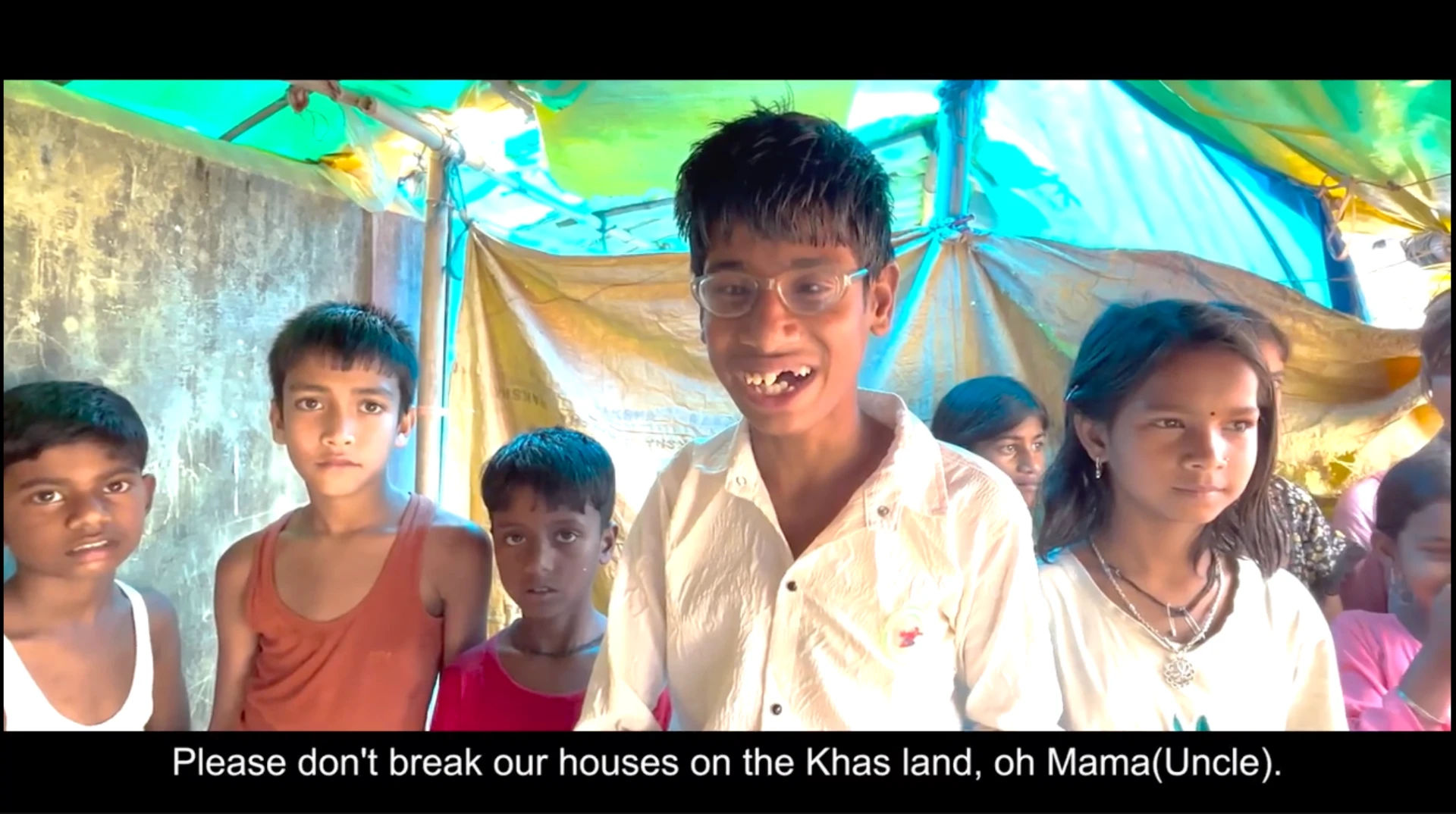
Amidst this deepening crisis, a young disabled boy with a beautiful voice sings to the Chief Minister from beneath a blue tarpaulin sky, his family’s home on Khas land - or government-owned land - long demolished. Mama, is the tender honorific he uses to appeal to Sarma. Uncle.
Please don’t break our homes on the Khas land, Mama,
Don’t you understand?
I am falling at your feet, Mama, I am folding my hands…
We are burning in the heat, staying in this camp
The mosquitos are biting, we don’t feel good here, Mama
Please don’t break our homes on the Khas land, Mama
Don’t you understand?
In March 2026, the Panel of Independent International Experts (PIIE) released a report warning that “the systematic stripping of citizenship, legality, and residence from Bengali-speaking Muslims in Assam might… amount to apartheid as a crime against humanity.”
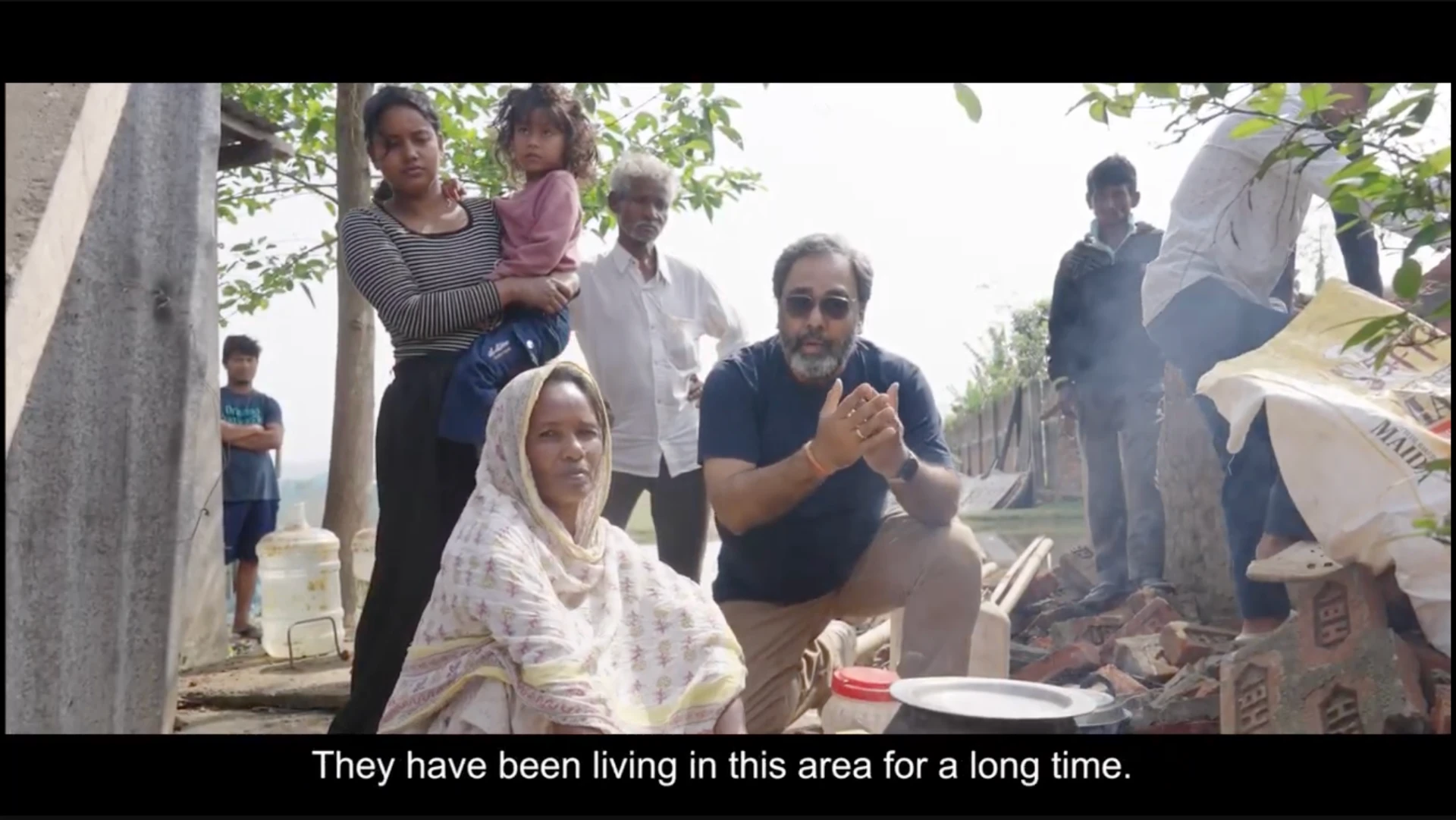
That same month, just weeks before Assam’s hate-filled general election season, filmmaker Dheeraj Sarthak and a small crew traveled to Assam to explore the human cost of Sarma’s politics of hate, from the tearing of bulldozers through Muslim neighborhoods, leaving thousands of families with nothing, to the inhumane conditions faced by those living in the camps.
Filmed across Goalpara, Golaghat, Morigaon, Barpeta, and Guwahati, the film shares the stories of displaced families, grieving parents, cancer patients struggling to afford even basic treatment, forests and homes crushed beneath bulldozers, schoolchildren who study for their exams in tents amid monsoon rains, and a boy who sings to the bigot from a plastic sky apartheid.
Watch Plastic Sky Apartheid now.
About our director: Dheeraj Sarthak is a filmmaker, screenwriter and documentary maker with extensive experience in sharing the stories that are often overlooked by mainstream Indian media. He previously worked as senior journalist with different Hindi News Channel for over 18 years, including News18 India, ZEE News, and News India World. He is the director of Aapara (2019), Point Blank Range (2019), Divorce (2018), It’s the Beginning (2017), 100 Rupees (2016), Wrong Way (2015), and many other feature and short films. Learn more about Dheeraj and his work here.
For more information on what’s happening in Assam, see PIIE’s Report To Examine Information About Alleged Violations of International Law Committed Against Muslims in Assam and Uttar Pradesh, India.
Click here to support more film projects by IMAM.